


This month, Shonaquip Social Enterprise was included in the Forbes Accessibility 200 list, recognising organisations around the world helping drive meaningful progress in accessibility and disability inclusion.
For a South African organisation that began in a small garage workshop more than three decades ago, the recognition marks an important moment, not only for the company itself, but for the growing global recognition of inclusive innovation emerging from African contexts.
Yet the story behind ShonaquipSE begins long before international recognition.
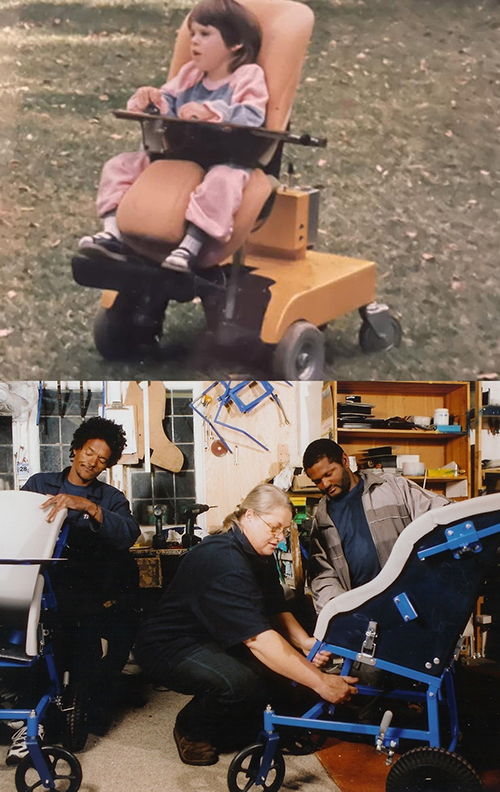
Where the Journey Began
When Shona McDonald began building supportive seating equipment for her daughter Shelly in the early 1980s, she was not trying to start a company. She was trying to solve a problem that thousands of families across Africa still face today: how do you create independence, dignity and participation when the systems around disability support barely exist?
At the time, appropriate assistive technology was difficult to access, prohibitively expensive and often designed for environments very different from the realities of everyday life in Southern Africa. Imported wheelchairs and positioning devices frequently broke under demanding terrain, could not easily be repaired locally and were disconnected from the broader support systems families actually needed.
What began in that small garage workshop in Cape Town slowly grew into something much larger than product manufacturing.
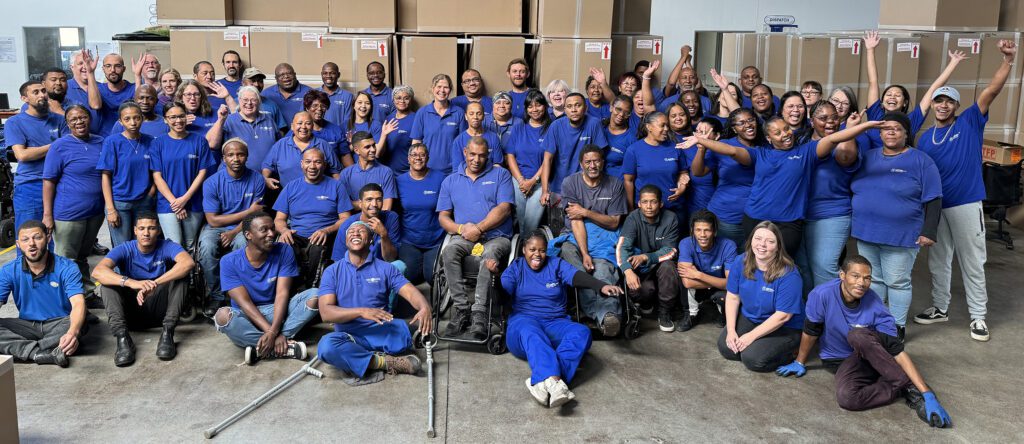
Over the past three decades, ShonaquipSE has evolved into one of Africa’s leading voices in assistive technology, disability inclusion and inclusive innovation.
Beyond Devices
What makes ShonaquipSE remarkable is not simply that it manufactures assistive devices. It is the way the organisation has reimagined what inclusion actually requires in environments where infrastructure, healthcare access and specialised support systems are often limited.
In many parts of the world, assistive technology is still approached as a product alone. But in practice, inclusion is rarely achieved by equipment in isolation.
A wheelchair may improve mobility, but true participation depends on far more than movement. It depends on whether children can access classrooms, whether families receive support, whether communities understand disability differently and whether devices are designed for the environments in which people actually live.
This understanding shaped ShonaquipSE’s ecosystem approach, one that combines assistive technology with training, clinical support, inclusive education, advocacy, community partnerships and innovation development.
The organisation works not only with children and adults with disabilities, but also with the systems surrounding them: parents, therapists, teachers, healthcare workers, community leaders and local partners. The goal is not simply to deliver equipment, but to strengthen the conditions that allow people to participate more fully in family, school, work and community life.
Building Solutions for Real World Conditions
That thinking has also influenced how ShonaquipSE approaches innovation itself.
For years, assistive technology across Africa has remained heavily dependent on donations, imported devices and external manufacturing systems. While many products were developed with good intentions, they were often not built for the conditions in which they would ultimately be used. Rough terrain, long travel distances, inconsistent infrastructure, limited trained clinicians and repair access all create challenges that standard international designs do not always account for.
Rather than accepting these limitations, ShonaquipSE began investing in local innovation capacity.
This led to the establishment of the Centre for Inclusive Innovation and Entrepreneurship (CIIE), a platform supporting innovators developing assistive technology and MedTech solutions for African contexts. Through the CIIE, entrepreneurs and innovators receive support in product development, prototyping, testing, manufacturability, regulatory guidance and commercialisation.
Importantly, many of these innovators are people with lived experience of disability themselves.
The centre reflects a growing shift taking place across Africa, where people with disabilities are increasingly becoming designers, founders, engineers and entrepreneurs helping shape the future of assistive technology from within their own communities.

Designing With Communities, Not Around Them
Alongside the CIIE, the Rural Assistive Devices Testing Lab (RAD Lab) is helping evaluate products under real world rural conditions, combining international standards with field based testing that reflects how devices are actually used across diverse African environments.
Together, these initiatives represent something far bigger than organisational expansion. They signal the emergence of a more locally rooted ecosystem for inclusive innovation, one that is building manufacturing capability, strengthening supply chains and creating opportunities for African solutions to scale globally.
Changing What Participation Looks Like
For ShonaquipSE, the Forbes Accessibility 200 recognition arrives during an important period of growth, but perhaps more importantly, during a broader global shift in how accessibility and inclusion are being understood.
Increasingly, the sector is recognising that some of the most meaningful innovation does not emerge from designing solutions at a distance. It comes from listening closely to lived realities, building with communities and creating systems that are sustainable long after a single device is delivered.
And perhaps that is what makes this story resonate beyond disability inclusion alone.
It is a story about what becomes possible when compassion is matched with innovation, when local knowledge is treated as expertise and when people who have historically been excluded from design conversations are given the opportunity to shape solutions themselves.
Because inclusion is never only about access to equipment. At its core, it is about creating the conditions for people to participate fully in society, not as recipients of support, but as active contributors to their communities, futures and economies.
To get involved or for more information, email info@ShonaquipSE.org.za
#BuiltDifferently #Accessibility #AssistiveTechnology #InclusiveInnovation #DisabilityInclusion #GlobalHealth
.