


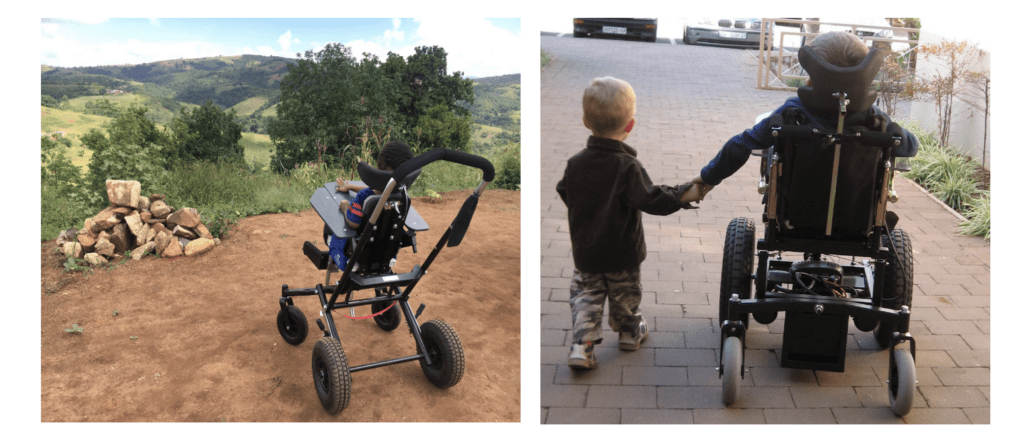
Children should be feasting at the dinner table, learning in classrooms, and playing with friends. But we know that thousands of children with disabilities are tragically excluded by a lack of access to adequate physical support. The good news? We are rewriting this narrative to prove that the right “fit” is the key to unlocking their personal power and freedom of choice!
Imagine a child limited to bed, lying on a couch, and confined to their home, unable to sit up straight to drink or eat a meal or make eye contact with a friend, simply because their wheelchair does not fit or support their body.
We see this reality every day for tens of thousands of children with disabilities in and beyond our country. They are often deprived of the simplest and most significant experiences such as family dinners, going outside or to the mall due to receiving generic mobility aids that fail to support their complex physical needs.
We often see well-meaning distributions of standard folding hospital transporter wheelchairs that fail these children. Without appropriate fit and posture support customisations, gravity becomes an enemy. A chair that is too wide, too deep or lacks posture support can cause atypical postures, such as severe spinal curvature (scoliosis), life-threatening pressure sores, contractures, respiratory and digestion disorders.
“Before receiving a properly fitted chair, life was challenging. Simple outings felt overwhelming,” shares Nolusindiso, a mother from our Parent Network. “There were times my son would vomit on my back because his head was not properly positioned. It was physically and emotionally exhausting”.
Empowering Children with Proper Fit
But it doesn’t have to be this way! At Shonaquip Social Enterprise, we have worked for 35 years to shift and change the narrative of pity and charity, that anything is better than nothing.
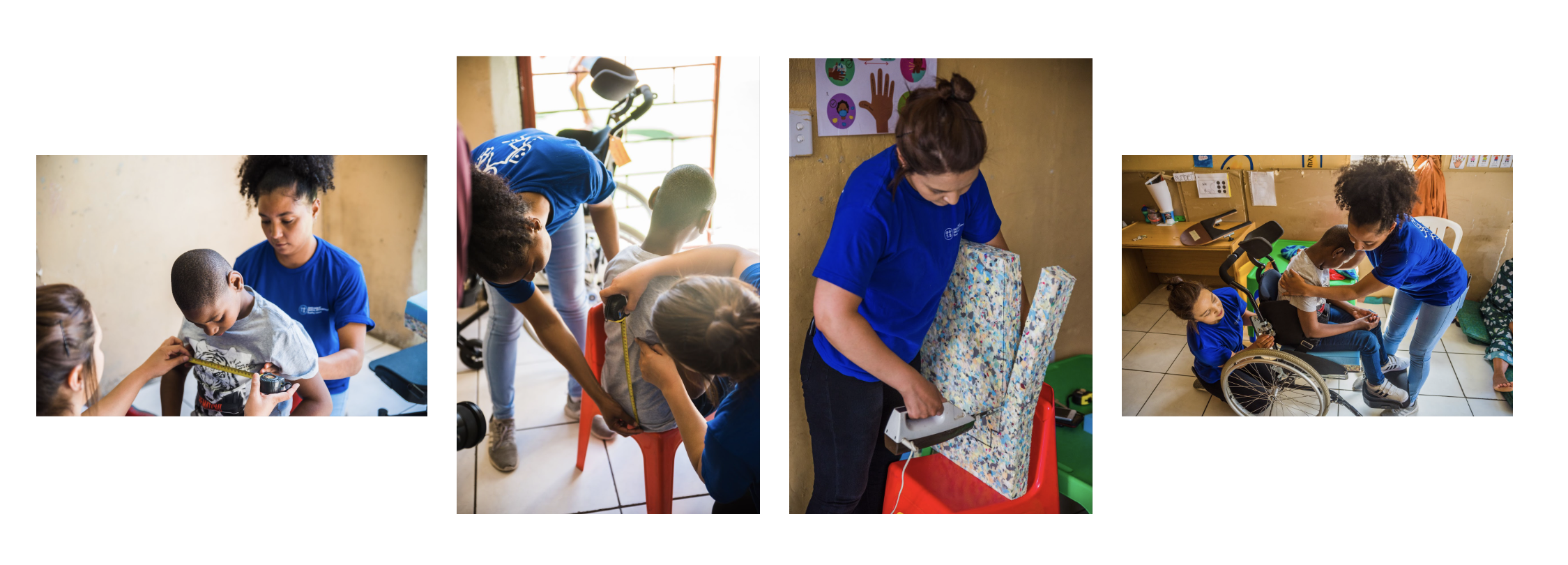
Wheelchairs are a medical device and provision of them is a science. We have moved beyond random “donations” to focus on postural management, improving function, and preventing secondary health complications. Spotlighting the challenges that arise when a device does not fit the child’s body or their rural environment in which it is used, is now considered the most basic level of good practice for any health care provider.
“Receiving a fitted chair truly changed our lives,” Nolusindiso told us. “Now we can sit with him upright without worrying about the pressure on his spine. We can enjoy meals together as a family at the dinner table without taking turns holding him”.
Championing Context-Based Solutions
Reading our 2025 Impact Report, you will see that real change comes when devices are designed for both the users personal needs and for the environments they will be used in.
We know that a wheelchair is useless if it cannot be used outside the house. That is why we champion assistive technology designed for South African terrains, such as our Madiba2Go that excel on muddy tracks and soft gravel paths to ensure a child can actually go to school.
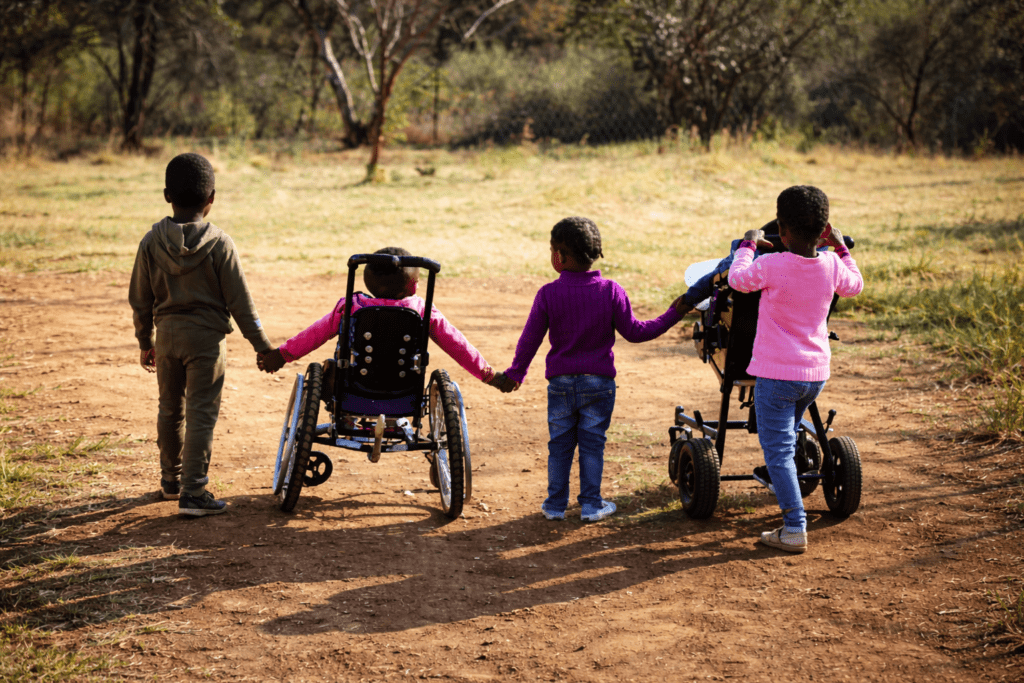
We believe that locally produced, properly assessed for, prescribed, and fitted assistive technology is best suited to meeting the actual needs of the children and families we serve. Not only does a well-fitting device prevent secondary health complications it ensures easy access to spares and support services, opportunities to attend school and work, while providing the added benefit of job creation for local technicians.
Inclusion is an economic imperative, a smart investment in the countries future growth, not a favour or charitable nice to have.
For our Shonaquip Social Enterprise team, this is not just about getting from A to B. It is about dignity. When a child is properly positioned, they regain the ability to learn and play, and feel good about themselves. Mobility, the ability to physically move without injury can be compared to raising your voice or accessing water; it is a basic human right, and once we understand this we can make it a reality.
We invite individuals, organisations, and partners to join this movement by simply sharing the message and raising more awareness.
To get involved or for more information, visit www.shonaquipse.org.za
#MakeADifference#RemovingBarriers#MadeInAfrica#SocialSupport#Development#SocioEconomicDevelopment#Shonaquip#ShonaquipSocialEnterprise#SDG#MakeADifference#DoGood#Inclusion#DoingGoodFeelsGood#HumanRights
.