


A South African Commitment to Assistive Technology
The United Nations has taken a historic step. South Africa must now turn that commitment into reality.
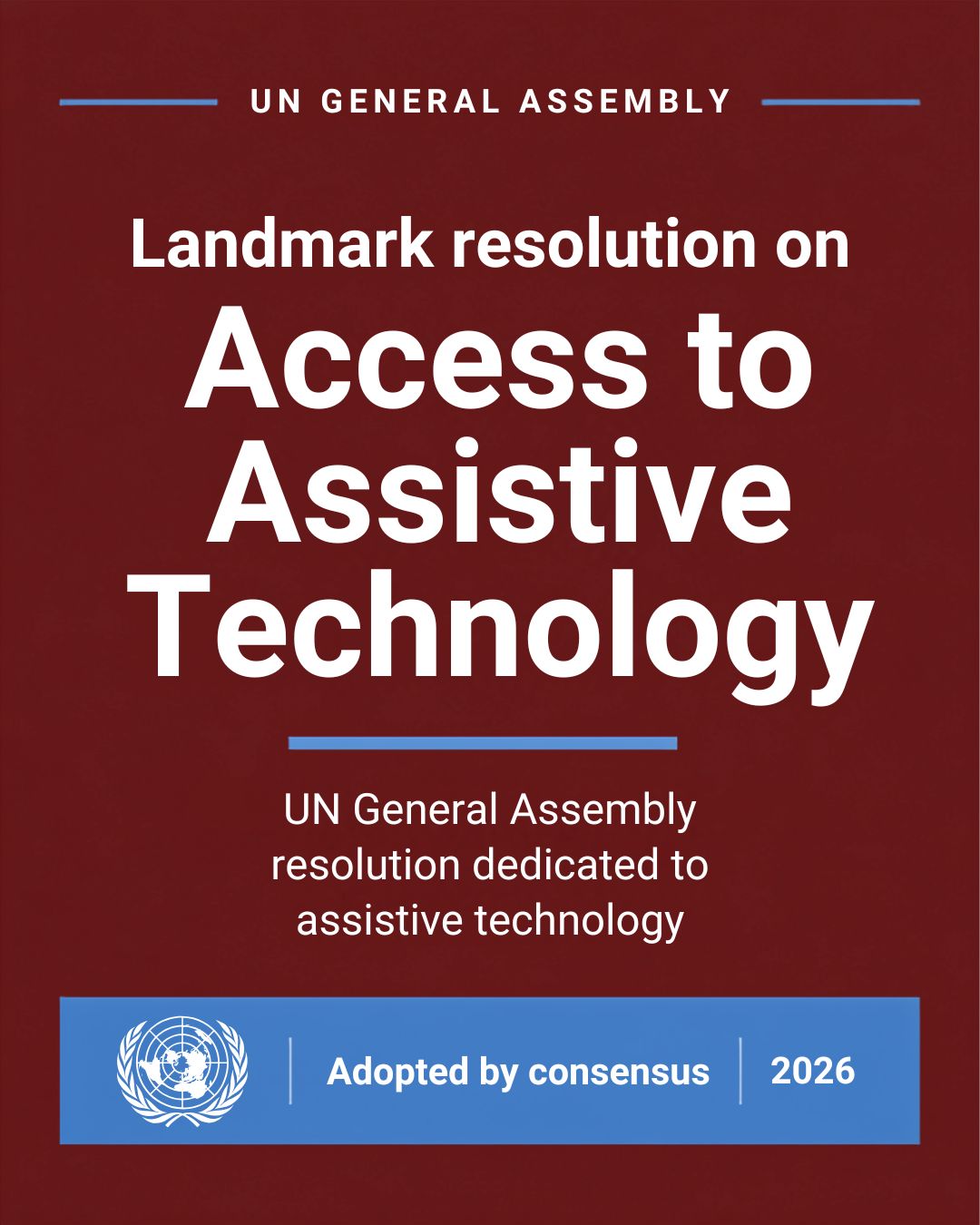
On 2 September 2026, the United Nations General Assembly adopted its first resolution dedicated to Access to Assistive Technology, A/RES/80/304, by consensus.
The resolution recognises assistive technology as an essential part of achieving the Sustainable Development Goals and advancing the rights of persons with disabilities. It calls for assistive technology to be integrated across health, education, employment, social protection and humanitarian systems, and for sustainable, affordable and equitable access to the products and services people need to participate in everyday life.
This is a landmark moment.
For Shonaquip Social Enterprise, however, it is also deeply familiar. For almost 30 years, ShonaquipSE has worked in South Africa to make inclusion possible through appropriate assistive technology, innovation, training, community-based support and partnerships.
We have learned that a device is never simply a device. A wheelchair is not merely a wheelchair when it determines whether a child can attend school.
A mobility device is not merely equipment when it determines whether a person can reach a clinic, visit family or earn a living.
An assistive product is not simply something that is prescribed and handed over. It can be the bridge between dependence and independence, between isolation and participation, and between being present in society and being able to belong.
The South African reality
South Africa has strong constitutional, policy and international commitments to the rights and inclusion of persons with disabilities.
South Africa ratified the United Nations Convention on the Rights of Persons with Disabilities in 2007, and the White Paper on the Rights of Persons with Disabilities established a framework for creating a free and just society in which persons with disabilities participate as equal citizens.
Yet the reality experienced by many South Africans remains very different. The country’s own progress reporting has identified significant backlogs and delays in the provision of basic assistive devices for education, mobility and communication, alongside barriers in transport, education, housing and employment.
For people living in rural and under-resourced communities, the challenge can be even greater.
Access may depend on travelling long distances to a clinic. A person may wait months or years for an appropriate device. A device may be supplied without adequate fitting, training, follow-up or maintenance. Roads may be inaccessible. Transport may be unavailable.
And sometimes there is simply no one to call.
This is where the idea of the first mile of inclusion becomes so important. Inclusion cannot begin at the school gate, the workplace, the clinic or the community centre if a person cannot get from their home to those places. The road to inclusion begins at home.
Beyond the device
ShonaquipSE has spent decades working from this understanding. Our experience has taught us that assistive technology must be appropriate to the person, the environment and the life they want to lead.
It must be affordable.
It must be available.
It must be properly fitted and understood.
It must be supported and maintained.
And, critically, the person who will use it must have a voice in the process. This is why ShonaquipSE’s work extends beyond designing and providing assistive products. It is about developing solutions that respond to real environments and real lives.
The story of the Off-Road Transporter illustrates this philosophy. The idea was born from seeing how people with disabilities in rural South Africa were being transported over terrain that conventional mobility devices could not negotiate. A person could have a wheelchair and still be unable to reach school, healthcare, family or community life.
The problem was not simply the device.
The problem was the system around the person.
That insight continues to shape our approach today.
The significance of the UN resolution
The United Nations resolution gives global recognition to something that people with disabilities and their families have known for generations:
Access changes lives. The resolution calls for assistive technology to be embedded within national systems rather than treated as an isolated or charitable intervention. It highlights the importance of health, education, labour, social protection and humanitarian preparedness working together.
It also recognises the importance of investment in local production, sustainable supply chains, innovation and the training of personnel who can properly prescribe, fit and maintain assistive products.
And it emphasises the meaningful participation of persons with disabilities and their representative organisations in decisions that affect their lives. These principles are profoundly relevant to South Africa.
They are also relevant across Africa and other low- and middle-income countries where access remains deeply unequal.
The global need is enormous. The WHO and UNICEF Global Report on Assistive Technology estimates that more than 2.5 billion people require one or more assistive products, with that number expected to rise to 3.5 billion by 2050. Access remains particularly unequal in low-income countries.
This cannot be solved by charity alone.
It requires systems.
It requires investment.
It requires local innovation.
It requires accountability.
And it requires listening to the people who live with these barriers every day.
From international commitment to South African action
The UN resolution should not remain a statement made in New York. It should become a catalyst for action in South Africa.
ShonaquipSE believes that South Africa now has an opportunity to build on its existing commitments and move toward a system in which access to appropriate assistive technology is recognised as an essential part of participation and inclusion.
- This means strengthening access across the public health system.
- It means reducing waiting lists and procurement barriers.
- It means supporting appropriate assessment, prescription, fitting, training and follow-up.
- It means investing in local production and African innovation.
- It means designing solutions for rural and low-resource environments rather than expecting people to adapt to solutions designed elsewhere.
- It means ensuring that emergency and disaster planning includes people who use assistive technology.
- It means collecting meaningful data so that governments and service providers can understand where the gaps are.
And it means ensuring that persons with disabilities are not merely recipients of services, but active participants in designing the systems intended to support them.
South Africa already has an important foundation on which to build. Its White Paper on the Rights of Persons with Disabilities explicitly promotes mainstreaming disability rights and the removal of discriminatory barriers, while government has also recognised the importance of universal design and access. The challenge now is implementation.
Inclusion is not an endpoint
For ShonaquipSE, inclusion has never been about placing a device in someone’s hands and declaring the job complete.
It is about what happens next.
Can the child reach school?
Can the parent get to work?
Can the person reach the clinic?
Can an older person remain independent?
Can someone participate in family and community life?
Can a person with a disability make choices about their own life?
Can they go where they want to go?
Can they belong?
These are the questions that should determine whether an assistive technology system is working. Because access to a device without access to life is not inclusion.
Our commitment
ShonaquipSE welcomes the United Nations General Assembly’s historic resolution on Access to Assistive Technology. We see it not as the beginning of the conversation, but as an important global recognition of a principle that people with disabilities, families, practitioners, advocates and innovators have been advancing for decades.
For nearly 30 years, ShonaquipSE has worked toward a simple belief:
Inclusion should not depend on where you live, how much you earn, or whether the system happens to have the right device available.
We believe that appropriate assistive technology should enable people to live with dignity, independence and choice. We believe that solutions must be designed with people, not simply for them. We believe that African challenges require African solutions. And we believe that the road to inclusion must be accessible from the very first mile. The UN has now given this principle a stronger global voice.
Our responsibility is to help turn that voice into action.
Because inclusion is not a privilege to be granted. It is a right to be enabled.
And the work begins where people live.
#AssistiveTechnology #UNGA80 #UHC #LeaveNoOneBehind
#ShonaquipSE #MedTech #MedTechSA #Innovation #DisabilityInclusion #InclusionExperts #SouthAfrica #SocialEnterprise
0 Comments